




联系人:曹经理
15092900031 18753990909电话:0539-7814888
公司传真:0539-7814555
地 址:临沂市莒南县大店开发区
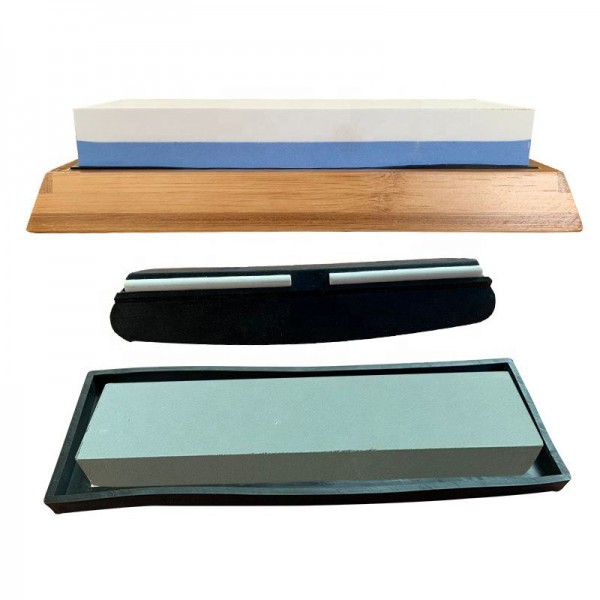
Bonded abrasives can be divided into ordinary abrasive bonded abrasives and superabrasive bonded abrasives according to the abrasives used. The former is made of ordinary abrasives such as corundum and silicon carbide, while the latter is made of superabrasives such as diamond and cubic boron nitride. In addition, there are some special varieties, such as sintered corundum grinding tools and so on.
Ordinary abrasive bonded abrasives are abrasive tools that consolidate ordinary abrasives into a certain shape and have a certain strength by a bonding agent. It is generally composed of abrasives, bonding agents and pores. These three parts are often called the three elements of bonded abrasives.
Abrasives play a cutting role in abrasive tools. The binder is a material that consolidates loose abrasives into abrasive tools, and there are two types of inorganic and organic. Inorganic binders include ceramics, magnesite, and sodium silicate; organic binders include resin, rubber, and shellac. Commonly used among them are ceramics, resins and rubber binders.
During the grinding process, the pores play a role in holding and removing chips, and can accommodate coolant, which helps to dissipate the grinding heat. In order to meet some special processing requirements, some fillers, such as sulfur and paraffin, can also be impregnated in the pores to improve the performance of the abrasive tool. This filler is also known as the fourth element of the abrasive.
The items that represent the characteristics of ordinary abrasive bonded abrasive tools are: shape, size abrasive, particle size, hardness, structure and bonding agent. Abrasive tool hardness refers to the difficulty of the abrasive grains falling off the surface of the abrasive tool under the action of external force, which reflects the strength of the bond to hold the abrasive grains.
Abrasive particle size
The particle size refers to the size of the abrasive particles, which is expressed by the particle size number.
The national standard stipulates two particle sizes of abrasive and micropowder.